

Uploading Images
Members of the Department can attach an image to a publication by logging in to the site and then clicking the edit link next to the publication titles below. Please note: all images attached to a publication will be visible on Department websites (including some research group sites, and the Department website)
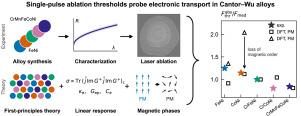
Probing the transport properties of Cantor-Wu alloys by means of femtosecond and nanosecond laser ablation
Effect of additives on the stability of lithium-metal electrodes
Efficient searches for low-energy structures in clusters with thousands of particles: Application to the Thomson problem
(doi: 10.1063/5.0355867)
datalab: federated data management infrastructure for materials chemistry and beyond
(doi: 10.21105/joss.10652)
Unique features of EIGHT fold-Proteins with the most complex 83 knotted topology.
(doi: 10.1073/pnas.2523017123)
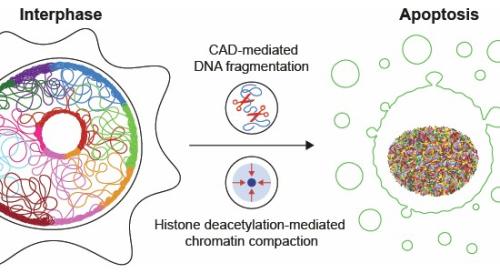
Electrostatic control of chromatin compaction safeguards against apoptotic DNA release.
(doi: 10.1038/s44318-026-00932-8)
Evaluating low-cost NDIR CO2 sensors for atmospheric observations in rural settings
An Alkali Amide Approach to Triphosphabenzenes
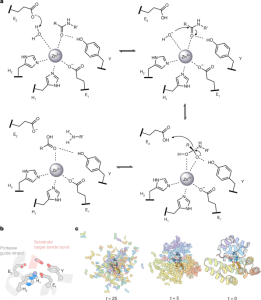
Nephrolepis cordifolia Extracts Attenuate Calcium Oxalate Nephrolithiasis Through Redox Modulation and Suppression of Crystal Retention
(doi: 10.3390/antiox15101326)
Assessment of an updated polar stratospheric cloud parameterisation for the UK Earth System Model (UKESM1.1) within the UK Met Office Unified Model (v13.9) using CALIOP and MLS observations
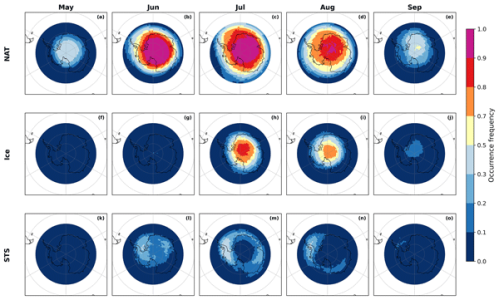
(doi: 10.5194/gmd-19-9857-2026)
Stable deep-blue organic light-emitting diodes with reduced efficiency roll-off via accelerated exciton utilization
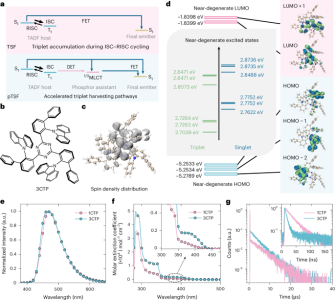
(doi: 10.1038/s41566-026-02029-4)
Reassessing Methanesulfonic Acid as a Sea Ice Proxy: An Example From the Weddell Sea Sector
(doi: 10.1029/2026GL124543)
Zatom-2: Multitask Pretraining on Atomistic Data for Generative Modeling across Domains
Selective Ligand Replacement Leads to Carbene Complexes as Catalysts in Proteins
- Page 1
